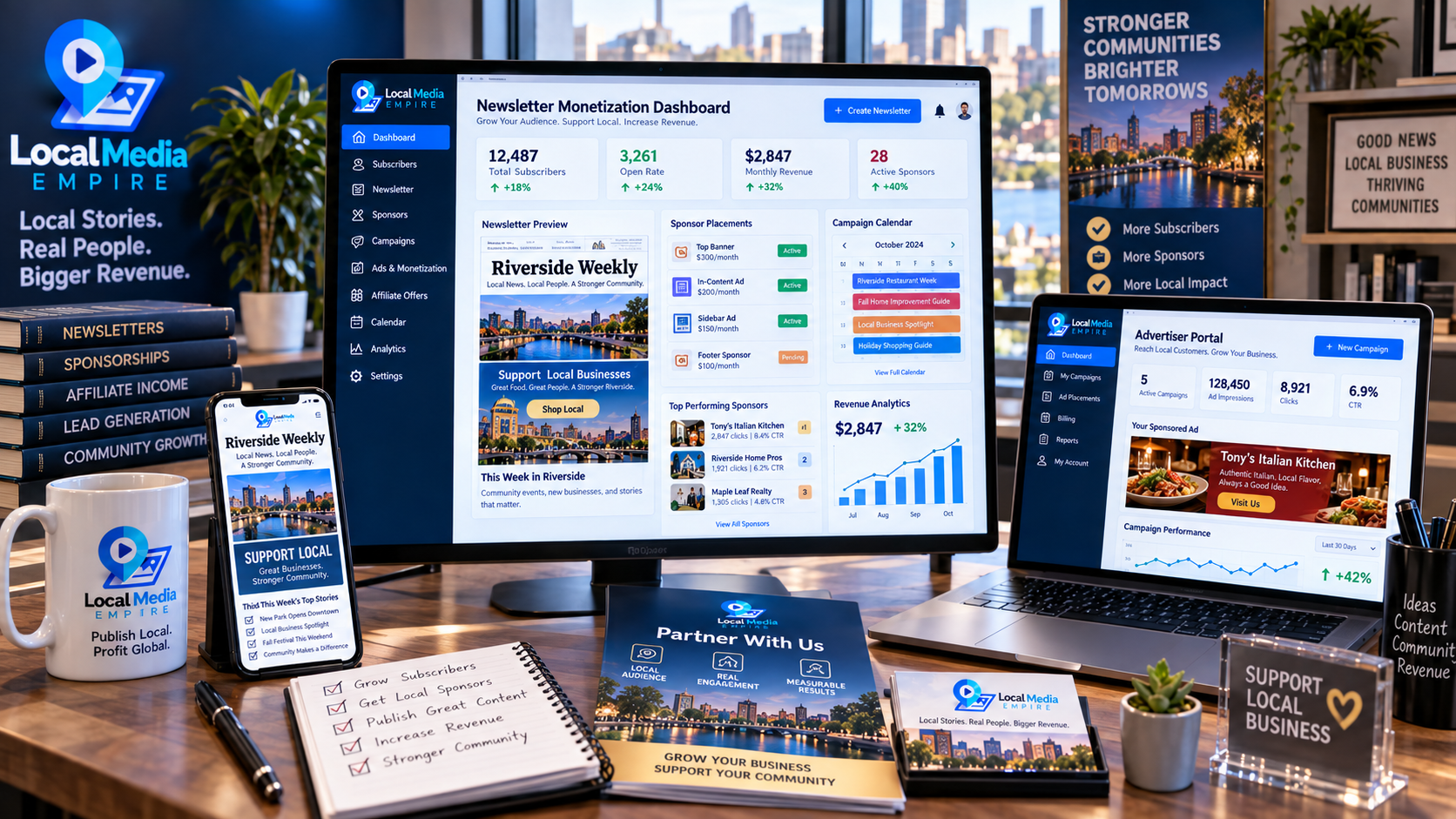
Yes, you can build a digital media asset you can potentially sell by creating a focused publication with valuable content, an owned audience, a recognizable brand, consistent traffic, and multiple revenue opportunities. Local Media Empire is designed around this model, combining AI-assisted local content, a professional media website, newsletter publishing, audience management, and additional monetization capabilities.
The important distinction is that a sellable digital media asset is more than a website full of articles. The real asset is the combination of the brand, content library, audience, subscriber base, traffic, business relationships, and revenue systems that you build over time.
What Is a Digital Media Asset?
A digital media asset is an online property that has an established audience and identifiable business value.
It can include:
- A branded website
- An email newsletter
- A growing content library
- An engaged audience
- Organic and referral traffic
- Advertising relationships
- Affiliate revenue
- Lead-generation systems
- Business directories
- Established publishing processes
The more of these components work together, the more substantial the underlying digital property becomes.
How Do You Build a Digital Media Asset You Can Sell?
Choose a valuable niche or local market, build a recognizable brand, create useful content consistently, grow an owned audience, establish repeatable revenue, document the operation, and build the business so it can function beyond your personal involvement.
1. Choose a Focused Market
Start with a market that has a clearly identifiable audience.
For a local media asset, this could be a city, town, neighborhood, or specific community. A focused market gives you a defined audience and makes it easier to create content that is genuinely relevant.
A narrow starting point can also give you room to expand once the initial publication gains traction.
2. Build a Recognizable Brand
A digital asset should have an identity beyond its individual articles.
Choose a memorable publication name, establish consistent branding, and make the website immediately communicate what the publication is about and who it serves.
The objective is to create something readers recognize and return to rather than another disposable content site.
3. Build a Valuable Content Library
Content is one of the foundations of a media asset.
Create a combination of timely and evergreen material. A local publication might cover community news, business developments, events, guides, resources, and other information that remains useful to the target audience.
Over time, individual articles become part of a larger searchable content library.
4. Build an Owned Audience
Website traffic alone isn’t enough.
Create a newsletter and encourage visitors to subscribe. An email audience gives the publication a direct relationship with its readers and creates another channel for distributing new content.
This is particularly important when thinking about the long-term value of a digital media asset. You’re not simply building pages; you’re building an audience that can continue receiving and engaging with the publication.
5. Create Multiple Revenue Streams
A sellable media property becomes more commercially interesting when it isn’t dependent on a single source of income.
Potential revenue streams include:
- Local advertising
- Newsletter sponsorships
- Affiliate marketing
- Lead generation
- Business directory listings
- Sponsored content
- Marketing services
The appropriate combination depends on the audience and market, but multiple revenue sources can make the underlying business more diversified.
6. Use AI to Make the Operation More Efficient
AI can help reduce the repetitive work involved in running a media property.
It can assist with content research, article creation, summaries, newsletter preparation, and other publishing tasks.
This can make it easier for a small team or solo operator to maintain a larger publication without creating an equally large operational workload.
Human oversight remains important, particularly for factual local information and editorial decisions.
Where Does Local Media Empire Fit?
Local Media Empire is designed around the idea of building an owned local media property. Its platform combines AI-powered local articles, local content research, a professional media website, newsletter publishing, subscriber management, and additional tools for advertising and local directories.
The Pro upgrade supports multiple local media publications, while the Local Advertiser and Local Directory upgrades add additional monetization and local-business capabilities.
For a closer look at how these components fit together, see the Local Media Empire review.
7. Document Your Publishing System
If you eventually want another person to operate the asset, avoid building a business that exists entirely inside your head.
Document your content workflow, publishing schedule, audience-growth methods, advertising process, newsletter routine, and other recurring tasks.
A documented system makes the operation easier to manage and reduces the dependence on the original owner.
8. Track the Numbers That Matter
Keep organized records of the metrics that demonstrate how the asset is performing.
Depending on the business, these can include audience size, subscriber growth, traffic sources, advertising activity, revenue, recurring customers, content production, and other relevant operating information.
A potential buyer needs to understand not only what the website looks like but how the business actually operates.
9. Make the Business Less Dependent on You
This is one of the most important principles when building an asset with a potential future sale in mind.
If every article, advertiser relationship, newsletter, technical task, and business decision requires the owner’s direct involvement, the asset can be harder to operate independently.
Use systems, automation, documentation, and repeatable processes wherever practical.
Can a Local Newsletter Become a Sellable Asset?
Yes. A local newsletter can become part of a larger digital media asset when it develops a recognizable brand, an owned subscriber audience, valuable content, traffic, revenue, and repeatable operations.
The newsletter can work together with the website rather than existing as a standalone email list.
The result is a broader property that combines content, audience, distribution, and monetization.
What Makes a Digital Media Asset Attractive to a Buyer?
There isn’t one universal formula, but buyers generally need enough information to understand what they are acquiring and how the business operates.
A well-organized asset can demonstrate:
- A clearly defined audience
- Consistent content production
- An established brand
- Owned subscriber relationships
- Reliable traffic sources
- Documented revenue streams
- Repeatable operating processes
- Opportunities for further growth
The stronger the connection between these components, the more substantial the media business becomes.
Final Thoughts
Building a digital media asset you can potentially sell starts with thinking like an owner rather than simply a content creator.
Build a focused brand, create valuable content, grow an owned audience, develop multiple revenue streams, use AI to improve operational efficiency, and document the systems that make the publication work.
Over time, you’re building something much larger than a collection of web pages. You’re building a media property with a brand, audience, content library, distribution channels, and commercial infrastructure.
If you want to explore a platform designed to help build this type of local media property, read the full Local Media Empire review.